City Buses in Bus Simulator 27
A practical ranking of compact, rigid, articulated, and double-decker types for Mequina and Alcaztelar — named models only.
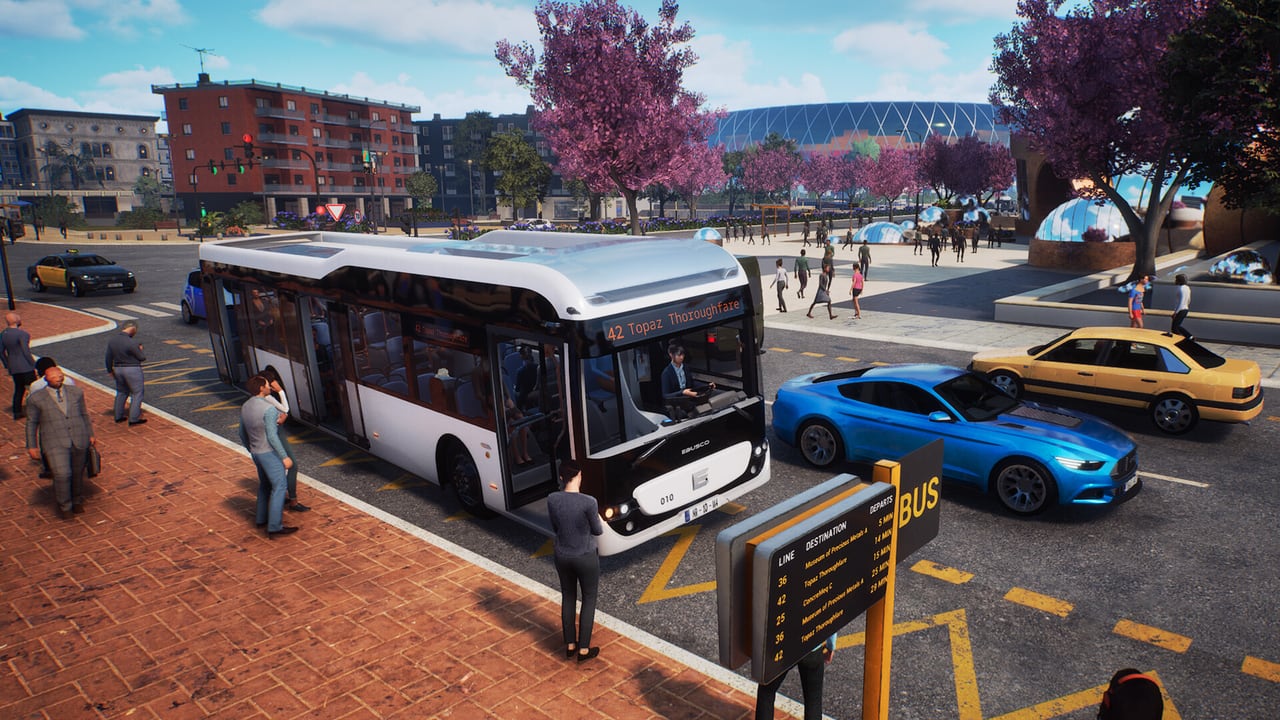
City work is still the core of Bus Simulator 27. Felicia Bay has twenty districts and two very different urban cores: coastal Mequina and mountain Alcaztelar. This page ranks city and transit types for that work. It is not a list of all 45-plus licensed buses, and it does not invent models that have not been named. For battery, hydrogen, and CNG planning, use the sibling electric buses ranking. For long-distance coaches, use the coach fleet page.
The Steam demo’s city line sits in Mequina behind the Solaris Urbino 12 electric. That bus is the calibration vehicle for every other city type below: if a garage pick is harder to place, slower to clear a stop, or too long for the old streets you just drove, it drops a rank even if it carries more people.
Ranking rule
We rank types first, then slot confirmed models into those types. A type can sit high even when only one named bus represents it. A type can sit lower when Felicia Bay’s streets punish its size, even if real-world operators love it.
- Rigid city buses — default pick for mixed district work.
- Compact city buses — specialist pick for tight historic streets.
- Articulated city buses — specialist pick for busy trunk corridors.
- Double-decker city buses — specialist pick for high seated tourist loads, with height as the tax.
That order is for most Career and Story minutes in Mequina and Alcaztelar. Flip it on a single route if the timetable, stop length, or tourist surge says otherwise.
Rigid city buses — rank 1 for everyday Felicia Bay work
A rigid 12-metre-class city bus is the safest first garage buy. It fits standard stops, it is easier to thread through traffic than an artic, and it still carries a full inner-city load. Confirmed names in this band:
- Solaris Urbino 12 electric — the demo city bus and the public face of Solaris in this game.
- Blue Bird SIGMA 12m — a 12-metre city bus from Blue Bird, useful as a rigid alternative once the garage opens.
- Iveco E-Way — IVECO BUS’s electric city bus; treat it as a rigid transit tool, then read charging notes on the electric buses page.
- Iveco Crealis — a BRT-styled city bus. Rank it with other rigids on mixed streets; it looks most at home on cleaner, higher-spec corridors.
- HESS lighTram 12 Plug — Deluxe Pack. A 12-metre electric with tram-like styling. Still a rigid city bus for ranking purposes, not a coach.
If you are building a company from the getting started habits, fill rigid slots before you chase the novelty of an artic or a double-decker. Most of the twenty districts will thank you.
Compact city buses — rank 2, first on tight streets
The confirmed compact is the Alexander Dennis Enviro100EV, part of the Deluxe Pack. Short electrics exist to survive old-town corners, cafe spill, parked cars, and tourist pinch points that a 12-metre rigid fights. Put the Enviro100EV at the top of a Mequina historic loop or an Alcaztelar hillside feeder. Do not make it your only bus if you also run high-demand waterfront or station corridors — it wins on fit, not on peak load.
Compact is the type you pick when the Felicia Bay street is the constraint. If the constraint is passengers per hour, skip to articulated.
Articulated city buses — rank 3, first on trunk lines
The confirmed artic is the Solaris Urbino 18 hydrogen, winner of Bus of the Year 2025. It is the high-capacity city tool on this list: more doors, more interior, more of the bus hanging out of a stop if you misjudge the bay. Rank it above a rigid only on routes that actually fill. On a quiet hillside feeder it is wasted length.
Drive an artic as a different vehicle, not as a stretched Urbino 12. You need earlier turn-in, more patience at junctions, and a cleaner line into stops so the rear body does not sweep a kerb. The how to drive guide is the place to practise that before you put hydrogen capacity on a live timetable.
Hydrogen also changes depot thinking. There is no public kWh or kilogram figure worth quoting here; just plan the artic onto routes that justify the extra vehicle, then read the electric buses page for powertrain notes.
Double-decker city buses — rank 4 until a model is named
Double-decker is a confirmed type in Bus Simulator 27. No specific double-decker model has been named on this wiki, so this rank is for the type, not a badge. High seated capacity helps tourist corridors and sightseeing-heavy districts. Height is the tax: trees, awnings, historic wires, and mountain-road cutbacks in Alcaztelar can all punish a deck you have not measured. Keep double-deckers off routes you have not walked or driven at least once.
When a named double-decker appears in the garage, it belongs in this band. Until then, do not invent a manufacturer or a product line just to fill an S-tier slot.
Mequina versus Alcaztelar
Mequina’s coastal grid mixes promenade, old streets, and busier tourist stops. Rigid electrics such as the Urbino 12 electric and Iveco E-Way are the obvious everyday pair; keep a compact Enviro100EV for the pinch points. Alcaztelar’s mountain setting adds grades, tighter historic fabric, and longer sightlines between districts. The Urbino 18 hydrogen still belongs on a busy climb only if the stops and junctions can take the extra length. A rigid Blue Bird SIGMA 12m or Iveco Crealis is the less dramatic way to add capacity while you learn the hills.
Weather, day-night cycle, and traffic events will all hit city types harder than coaches. Leave more recovery time on artics. Leave more mirror time on any bus you have not driven in the demo.
What not to park on a city line
The Mercedes-Benz Tourismo, Scania Irizar i8, and MAN Lion’s Coach are long-distance coaches, not oversized city buses. They belong on intercity work described in the coach routes guide. Putting a coach on a five-stop beach shuttle wastes the new type this series finally has.
Volvo, Vicinity Motor Corp, Ebusco, and SAFRA are confirmed city-side brands without public model names here. Leave them off the ranking until a garage label exists.
After you finish the demo’s Urbino 12 electric loop, decide the next city slot as a type: another rigid for coverage, a Deluxe compact for old streets, or the hydrogen artic for one trunk line. That decision will do more for Felicia Bay than chasing an unnamed double-decker or a coach you will not use until the mountain highway opens.
Frequently Asked Questions
Quick answers about Bus Simulator 27.
Which city bus type should I buy first in Bus Simulator 27?
A rigid 12-metre-class city bus. The Solaris Urbino 12 electric is the demo reference. Compact, articulated, and double-decker types are specialists, not default starters.
Is the Alexander Dennis Enviro100EV a city bus or a coach?
A compact city electric. It is part of the Deluxe Pack and ranks for tight Mequina and Alcaztelar streets, not for long-distance coach work.
Where does the Solaris Urbino 18 hydrogen rank?
Top of the articulated band, used on busy trunk routes. It is Bus of the Year 2025, but it is harder to place than a rigid and is not the first city buy.
Are double-deckers in Bus Simulator 27?
Yes as a type. This page ranks the type for high seated tourist loads. No specific double-decker model is named here, so no badge is invented.
Should I use coaches on Mequina city routes?
No. Keep coaches on long-distance work. City rankings cover compact, rigid, articulated, and double-decker transit types only.
How do I actually drive these buses well?
Use the how-to-drive guide for doors, bus computer, and stop approach. Articulated buses need extra space and a cleaner line into bays.